
Views: 0 Author: Site Editor Publish Time: 2025-08-19 Origin: Site
Are you looking for a durable, versatile material for your next project? High-density PVC foam boards are a game-changer. Known for their strength and rigidity, these boards are used in various industries from construction to signage.
In this post, we’ll explore what makes high-density PVC foam boards unique and why they’re a preferred choice. You’ll learn about their key features, applications, and how they compare to standard PVC foam boards.
A PVC foam board is a lightweight, durable material made from polyvinyl chloride (PVC). It features a closed-cell structure that gives it a smooth surface and rigid texture.
These boards are commonly used in applications requiring strength without the weight. They are made up of PVC resin, foaming agents, and fillers like calcium carbonate, which together create a versatile, cost-effective material. PVC foam boards are waterproof, resistant to corrosion, and have fire-retardant properties, making them suitable for a variety of uses.
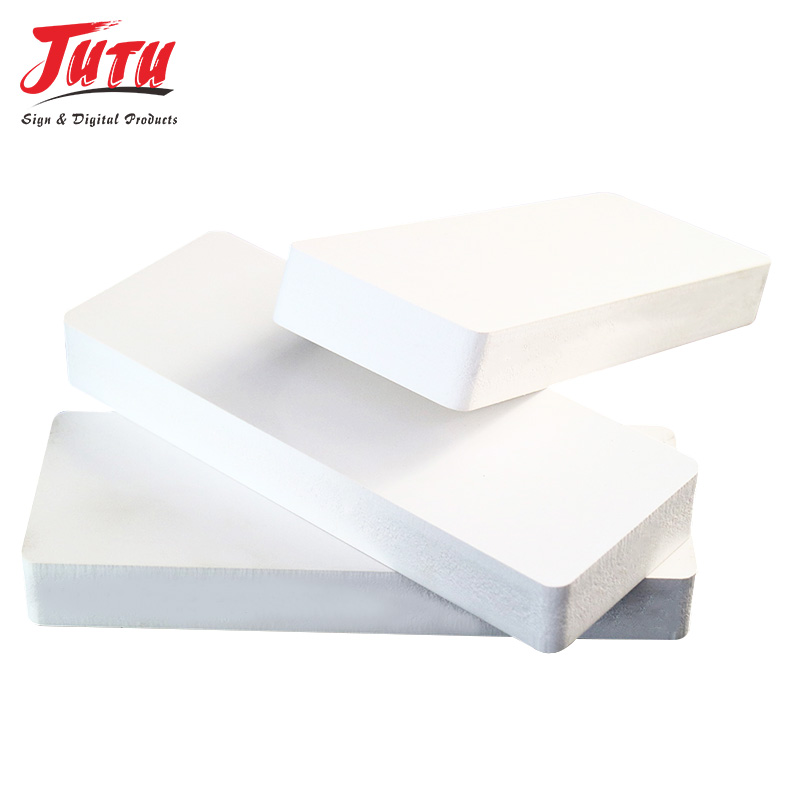
PVC foam boards are used in a range of industries. Some of the most common applications include:
Signage and Displays: Lightweight and weather-resistant, perfect for both indoor and outdoor use.
Construction: Often used for wall cladding, partitioning, and decorative elements due to its strength and ease of installation.
Furniture: Ideal for cabinetry, countertops, and other furniture elements thanks to its durability and finish.
The production of PVC foam boards involves a process called extrusion. PVC resin is mixed with foaming agents, fillers, and stabilizers. This mixture is heated and pushed through an extruder, where it forms a continuous sheet of foam.
The foaming agents are crucial in determining the final density and properties of the board. By controlling the amount of foaming agent, manufacturers can adjust the board’s rigidity and weight. The extruded board is then cooled, cut, and sized for different applications.
This process allows manufacturers to create a range of thicknesses and sizes, making PVC foam boards adaptable to various project needs.
High-density PVC foam board is a variant of standard PVC foam board, but it features a denser structure. This means it has fewer air pockets and a more solid composition. The result is a stronger, more rigid board that can handle more stress without losing its shape.
Compared to regular PVC foam boards, high-density variants are much more durable. This makes them ideal for demanding applications where toughness and reliability are key.
The denser cellular structure of high-density PVC foam board directly impacts its properties. With fewer air pockets, the board becomes less flexible but much more robust. This leads to:
Increased Strength: It can bear heavier loads without warping or breaking.
Improved Impact Resistance: Less likely to suffer from dents or cracks when subjected to force.
Smoother Surface: A denser structure offers a cleaner, more uniform surface that’s perfect for printing and painting.
In PVC foam boards, density refers to the mass of the material relative to its volume. For high-density variants, the density usually ranges from 0.8 g/cm³ to 1.2 g/cm³.
The increased density of high-density PVC foam boards enhances their performance in a variety of ways. Here’s how it impacts different factors:
Strength and Rigidity: Higher density makes the board stronger, allowing it to support more weight and remain stable under pressure.
Durability: Denser boards last longer in harsh environments because they are more resistant to wear and tear.
Application Scope: High-density boards are ideal for structural applications like construction, furniture, and signage, where additional strength is necessary.
High-density PVC foam boards are known for their superior strength. Their denser cellular structure gives them more rigidity, making them perfect for heavy-duty applications. These boards can withstand more stress without bending or warping, which is essential in construction, signage, and other demanding industries.
Because of this increased strength, they’re commonly used in applications where the material will bear heavy loads or endure significant wear over time.
One of the biggest advantages of high-density PVC foam boards is their ability to resist impacts. Compared to lower-density boards, they are far less likely to dent or crack when subjected to force. The denser structure absorbs shock better, making them ideal for environments where impact resistance is crucial.
For example, in areas exposed to frequent handling or mechanical stress, high-density boards stand up better and maintain their integrity longer than their lighter counterparts.
The smooth surface of high-density PVC foam boards is one of their standout features. This finish makes them highly suitable for aesthetic applications, such as signage, displays, and furniture. The uniform surface provides excellent results for printing, painting, and coating, ensuring a high-quality appearance that lasts.
A smoother surface also helps with cleaning and maintaining the board, making it more durable and visually appealing in the long run.
High-density PVC foam boards excel in dimensional stability. They maintain their shape and size even when exposed to changes in temperature and humidity. This stability ensures that the board doesn’t warp, swell, or shrink, making it ideal for both indoor and outdoor use.
In industries where environmental factors like moisture or extreme temperatures are a concern, high-density PVC foam boards provide a reliable solution, offering consistency and durability in fluctuating conditions.
High-density PVC foam boards are commonly used for outdoor signage and exhibitions. Their durability and resistance to weather conditions make them perfect for long-lasting displays. Whether it's a billboard or a promotional stand, these boards can endure rain, wind, and sun exposure without deteriorating.
The smooth surface finish also enhances printability, ensuring vibrant, high-quality graphics that stand up to the elements. Additionally, their lightweight nature makes installation easier, saving time and effort during setup.
In construction, high-density PVC foam boards serve as an excellent material for architectural elements such as moldings, cladding, and partitions. Their rigidity and strength make them suitable for structural applications, and their resistance to impacts ensures they maintain their integrity even in high-traffic areas.
These boards also excel in outdoor environments, as they are resistant to weathering. Whether used for exterior cladding or interior design, high-density PVC foam boards continue to perform well under demanding conditions.
High-density PVC foam boards are widely used in the manufacturing industry. Their strength and versatility make them ideal for creating parts, components, and prototypes. In automotive, aerospace, and electronics, these boards provide a lightweight yet durable option for manufacturing tools, fixtures, and custom parts.
The material can be easily shaped, routed, and machined, making it perfect for precise applications in high-tech industries.
One of the standout features of high-density PVC foam boards is their waterproof properties. This makes them highly suitable for marine applications, such as boat building and marine decking. The boards can resist saltwater corrosion, ensuring they last longer in harsh marine environments.
Additionally, high-density PVC foam boards are used in outdoor furniture, pergolas, and other landscape structures. Their resistance to the elements makes them a reliable choice for creating durable outdoor furnishings.
High-density PVC foam boards are available in a wide range of thicknesses, from as thin as 3mm to as thick as 30mm. This variety allows you to choose the right board for your specific needs, whether you require a lightweight option or a thicker, more rigid material for heavy-duty applications.
Manufacturers also offer customization for both thickness and sheet size, allowing you to get the perfect dimensions for your project. Standard sizes typically include 4ft x 8ft (1220mm x 2440mm), but custom sizes are available upon request to meet unique specifications.
One of the great things about high-density PVC foam boards is the range of colors and surface textures they offer. You can find common colors like white, black, and gray, but many manufacturers also provide custom color options to match your specific design needs. Whether you're looking for a sleek, modern look or something more vibrant, the possibilities are endless.
In addition to color options, high-density PVC foam boards come with a variety of surface textures. You can choose from smooth, matte, or even embossed finishes, depending on your application. The smooth finish is perfect for printing, while the matte and embossed textures are ideal for applications requiring a non-glossy, textured surface.
High-density PVC foam boards offer significant advantages over regular PVC foam boards. Their enhanced strength and durability make them much more reliable for demanding applications. While standard PVC foam boards are lighter and less rigid, high-density variants are more rigid, providing superior structural integrity.
The added density improves resistance to impacts, wear, and weathering. This makes high-density boards ideal for long-term use in harsh environments, whether in construction, signage, or industrial applications. The strength and durability ensure that they maintain their shape and performance over time, even under stress.
Although high-density PVC foam boards may have a higher upfront cost, they are a worthwhile investment for demanding applications. Their increased durability means they require less maintenance and fewer replacements, saving money in the long term.
For projects that require long-term performance, like outdoor signage or heavy-duty construction, choosing high-density boards can provide more value over time. The material’s resistance to wear and weathering ensures a lower total cost of ownership, making it a smart choice for high-performance projects.
While high-density PVC foam boards offer many benefits, there are a few drawbacks to consider. One major downside is their higher initial cost compared to low-density boards. This can make them a less attractive option for budget-conscious projects, especially when lighter materials may suffice.
Another consideration is the handling and storage of high-density boards. Due to their heavier weight, they require more care during transportation and storage. Improper handling can lead to damage or difficulty in installation, making it important to ensure proper equipment and techniques are used during these stages.
PVC foam boards are made from polyvinyl chloride (PVC), which raises concerns about their ecological footprint. The production process and disposal of PVC materials can contribute to environmental pollution. Although PVC is durable, its long-term environmental impact, especially in landfills, should be considered.
Recycling options for PVC foam boards are available but can be challenging. Not all recycling centers accept PVC, and the material may require specialized processing. As demand for eco-friendly materials grows, it's essential to explore sustainable alternatives and recycling methods to reduce the environmental impact of high-density PVC foam boards.
High-density PVC foam boards are known for their strength, durability, and versatility. They perform well in demanding applications like construction, signage, and manufacturing.
When choosing the right board for your project, consider the specific requirements. If strength, impact resistance, and weather durability are key, high-density PVC foam boards are the ideal choice.
A: High-density PVC foam board is a type of rigid, durable material with a denser cellular structure than regular PVC foam boards, offering greater strength and impact resistance.
A: It provides enhanced strength, durability, impact resistance, and a smoother surface, making it ideal for outdoor signage, construction, and heavy-duty applications.
A: Yes, high-density PVC foam boards come in various thicknesses, sizes, colors, and surface textures, allowing for customization to meet specific project requirements.


